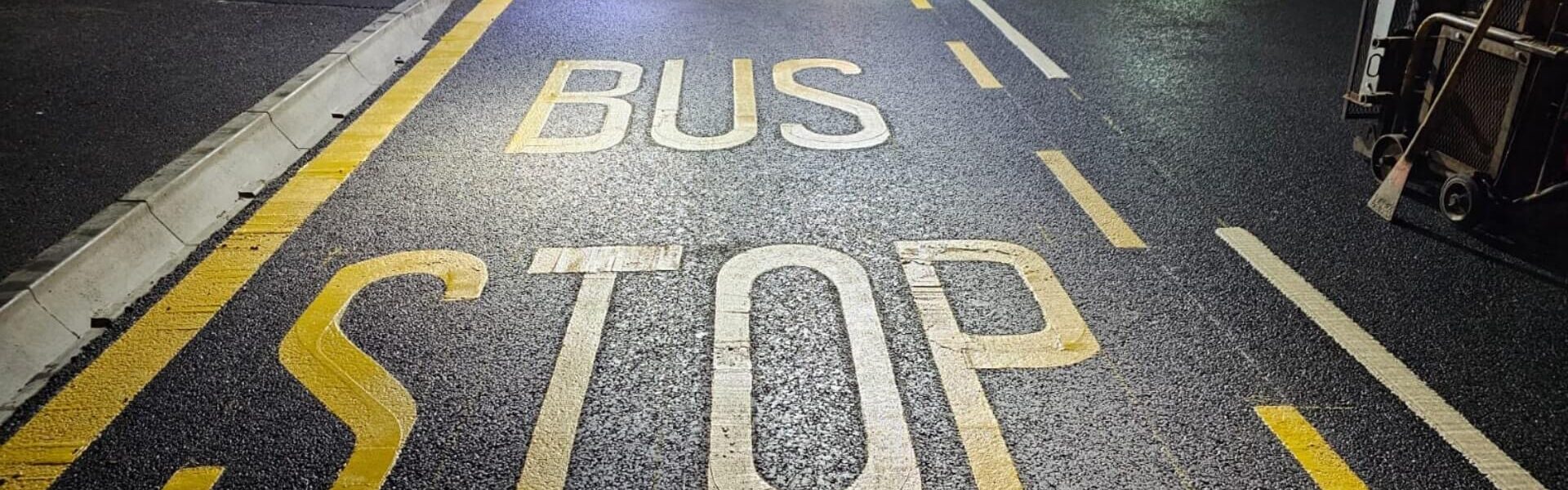

Hand-applied MMA falls under our ColdMark™ portfolio. It is a cold-applied system that is mixed and screeded by hand, mainly for arrows, letters, symbols and junctions, including where heavily worn markings need replacing.
The system is based on a two-component Methyl Methacrylate (MMA) resin formulation combined with embedded miniature glass spheres (beads). This unique chemistry provides exceptionally high levels of retro-reflectivity that remain consistent and sustainable throughout the product’s lifecycle.
Available as standard in white and yellow, with additional colours supplied subject to minimum order volumes.
Our hand-applied MMA has undergone rigorous testing and achieved certification in line with BS EN 1436.
This ensures performance levels that exceed industry requirements, delivering durability, skid resistance, and reflectivity under real-world conditions.
Unlike traditional thermoplastic systems, hand applied MMA is applied without heat. This advance technology delivers:
The surface preparation is dependent on the site conditions. The surface may need advance preparation e.g. shot blasting and primer.
Hand Applied MMA is easily maintained through routine sweeping, pressure washing, and general yard upkeep.
Hand Applied MMA eliminates the need for fossil-fuel heating, dramatically lowering carbon emissions. For 1,000m² of road marking over a ten-year lifecycle, comparative studies show:
This represents a 62% CO₂ reduction for screed when compared to thermoplastic.
It is reported that road markings contribute up to 7% of ocean microplastics worldwide. ColdMark™ addresses this through reduced material usage and extended lifecycle:
This results in a reduction of 18,000 kg (60%) for screed, significantly lowering the potential for microplastic release into marine environments.
Hand-applied MMA is a practical, heat-free option for detailed road markings, combining:
By choosing hand-applied MMA for arrows, letters, symbols and junctions, customers get a durable, BS EN 1436-certified marking while also reducing their carbon footprint and the potential for microplastic release.



