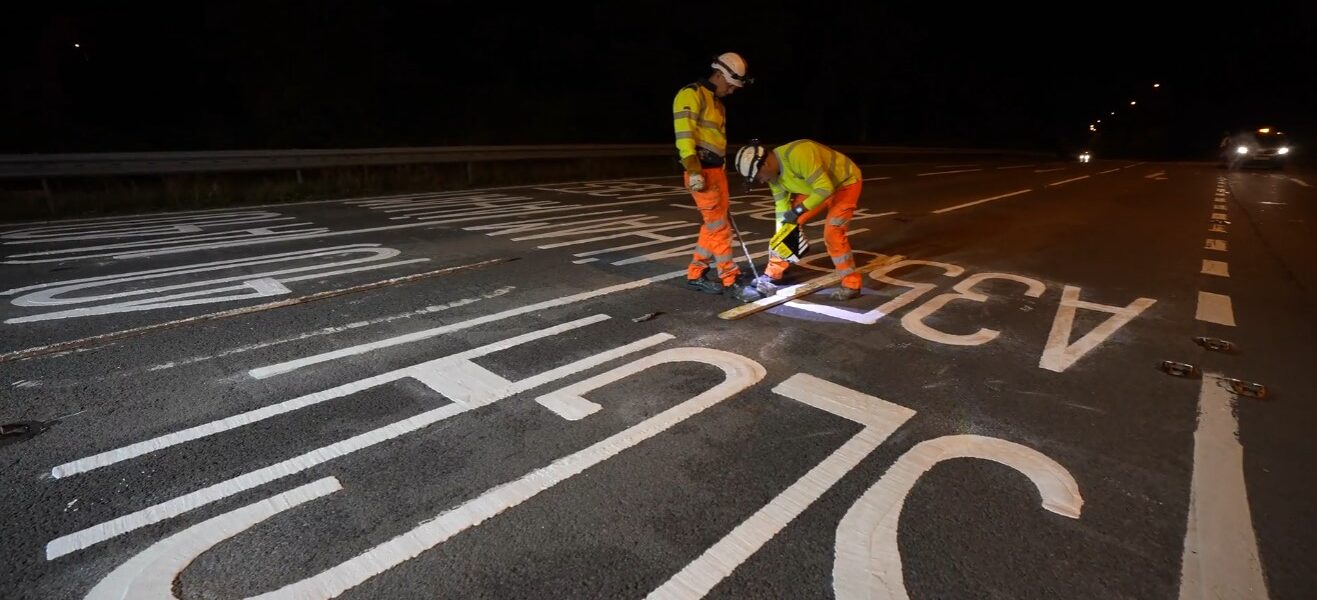
Every year, families across the UK lose someone on the road. Road markings save lives. Reflective studs save lives. And the cost of getting this right is a fraction of the cost of getting it wrong.
Bright Lines Save Lives — So Why Aren’t We Investing in Them?
A single highway fatality in the UK carries an estimated cost of £2 million. In 2023 alone, the total economic burden of road casualties on this country reached £46 billion.
But let us remember that these are not just statistics. They represent real people, real families, and a very real drain on public resources.
What makes this harder to accept is that some of the most effective road safety interventions are also among the most affordable, yet they remain chronically underinvested.
The Cost of Keeping Roads Safe
40% of road fatalities occur at night, and 1 in 9 involve rain as a contributing factor. These are conditions where visibility is compromised, and where high-quality road markings and reflective studs make a measurable, proven difference.
So what does it actually cost to keep those roads safe?
Take the M5 as our example, one of England’s most travelled and most fatality-affected motorways. Spanning 162 miles from Exeter to West Bromwich, when you account for every lane, both directions, and every slip road, that is 2,000,000 metres of road markings. At £1.00 per metre, a full refresh costs £2 million — precisely the estimated economic cost of a single fatality without even considering the families loss.
Add the M5’s approximately 150,000 road studs at £7.50 each, and the complete picture becomes clear.
The entire M5 — every marking, every stud — fully replaced for under £3.2 million. Less than the cost of two deaths.
The Cost of Doing Nothing
In the ten years from 2007 to 2016, the M5 recorded 91 fatalities equating to an estimated economic cost of £182 million. That figure says nothing of the grief those losses left behind.
If markings and studs were replaced on a regular cycle over that same period, the total investment would have been approximately £16 million — excluding traffic management. Even if better visibility had prevented just half of those deaths, the financial case alone is overwhelming.
Managing Director Greg Clark recently attended a seminar where representatives from the US State of Arkansas outlined their approach: all road studs replaced every 12 months, all road markings every 24 months — consistently, without exception. Their position was clear: the cost of replacement is insignificant compared to the cost of a death.
It is a position we wholeheartedly support.
A Challenge to Those Who Decide
The technology is not new. The evidence is not new. The argument — moral and financial — has been made before.
What is needed now is commitment. A structured, funded programme of regular road marking and road stud replacement on the UK’s major routes is not a radical idea. It is a logical, cost-effective response to a crisis that costs this country billions every year and families their loved ones.
We urge highways authorities, local councils, and the Department for Transport to look seriously at the data — and to act on it.
Bright lines save lives. Installing them saves the economy millions. The question for decision-makers is simple: what are we waiting for?
Quick Contact
Please fill in the form below and one of our friendly team will contact you personally.





