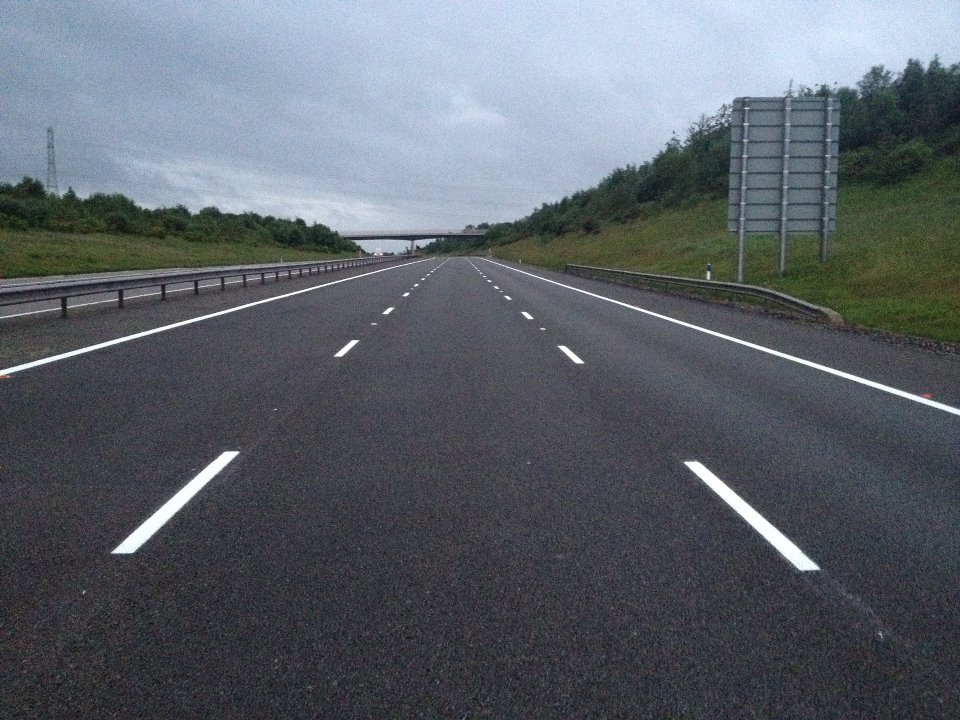
Did you know that road markings are the biggest safety feature implemented across the UK’s road and highway networks? In the UK, road markings and road studs need to be checked and tested at regular intervals to ensure they’re meeting the minimum reflectivity requirements.
A Guide To Road Retro-Reflectivity Testing
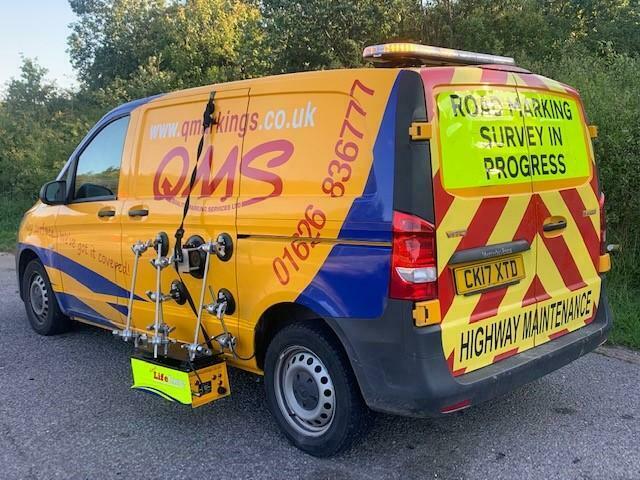
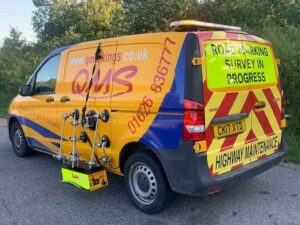
Retro-reflectivity tests are usually carried out by a high-speed vehicle to assess the condition’s reflectivity and wear. In this blog, our line marking experts break down what retro-reflectivity is, why it is important and how QMS LifeLine™ can help.
What is reflectivity testing for road marking?
Retro-reflectivity occurs when an object, in our case the line marking, reflects light directly back to the source (in most cases vehicle headlights). To ensure that all line markings are visible at night and in other adverse conditions, companies such as QMS conduct reflectivity testing on highways and roads, to ensure the line marking is performing to the standard that is expected!
How is the reflectivity of a road tested?
To test the performance of the line marking and cat eyes, the test must be taken from a moving monitor, at high speeds. At QMS, our QMS LifeLine™ is a mobile test that is carried out at traffic speed, to accurately monitor the real-life visibility of road markings.
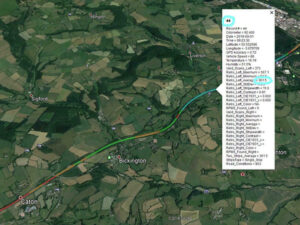
Our system from RoadVista, measures the line marking and the road studs simultaneously on any type of carriageway. Once the initial survey has been completed, the data and information is compiled into a user-friendly and easy-to-understand document that allows you to plan effective maintenance for ongoing compliance.
By utilising the latest laser technology, our front-facing HD video camera matches a video of the area with time stamps to reference spreadsheets and graph reports. Allowing the engineer to view the area tested from the comfort (and safety) of their workstation.
How to test for retro-reflectivity?
There are two ways you can measure retro-reflectivity within the road marking industry:
Handheld contact instruments – where the measurement device needs to be within physical contact with the road markings. The device will then illuminate the area of road markings and be able to see how much of that road marking reflects the light back into the device.
Non-contact instruments – these measure the retro-reflectivity from a distance, and can be either hand-held or vehicle-based devices (like our QMS LifeLine™). They work in the same way that they measure how much light is reflected back off of the road markings.
What are you measuring for when testing the retro-reflectivity or road markings?
The main purpose of retro-reflectivity testing is to ensure that all road markings are visible in all road conditions for all road users. Road users see road markings in two settings, night and day.
Reflection in the daylight or under road lighting (like street lamps) is measured as QD (day visibility). Whereas reflection under a vehicle headlight is known as RL (retro-reflectivity). RL is crucial for night-time and low-visibility driving, allowing the driver to see the road markings.
Benefits of choosing QMS LifeLine™ for your reflectivity testing
Ensuring your markings are compliant with the latest standards is crucial. This is why, when you work with QMS for all of your commercial line marking and road marking safety checks, not only will you receive accurate results, but you will also benefit from:
- Accurate equipment which is calibrated twice-daily
- Cs-126 compliant readings
- Surveys are completed at traffic speeds, so no need to set up diversions or close roads
- Cost-effective and time-effective
- Minimal disruption to existing road users
- HD-quality video and data
- Excellent customer service and communication
- Project completed within a chosen time frame
Ensure your road marking safety with QMS reflectivity testing solutions
Want to find out more about our retro-reflectivity testing solutions and how they could benefit you? Contact our friendly team today to find out more, contact us via info@qms.uk or call us at 01626 836777.
Quick Contact
Please fill in the form below and one of our friendly team will contact you personally.